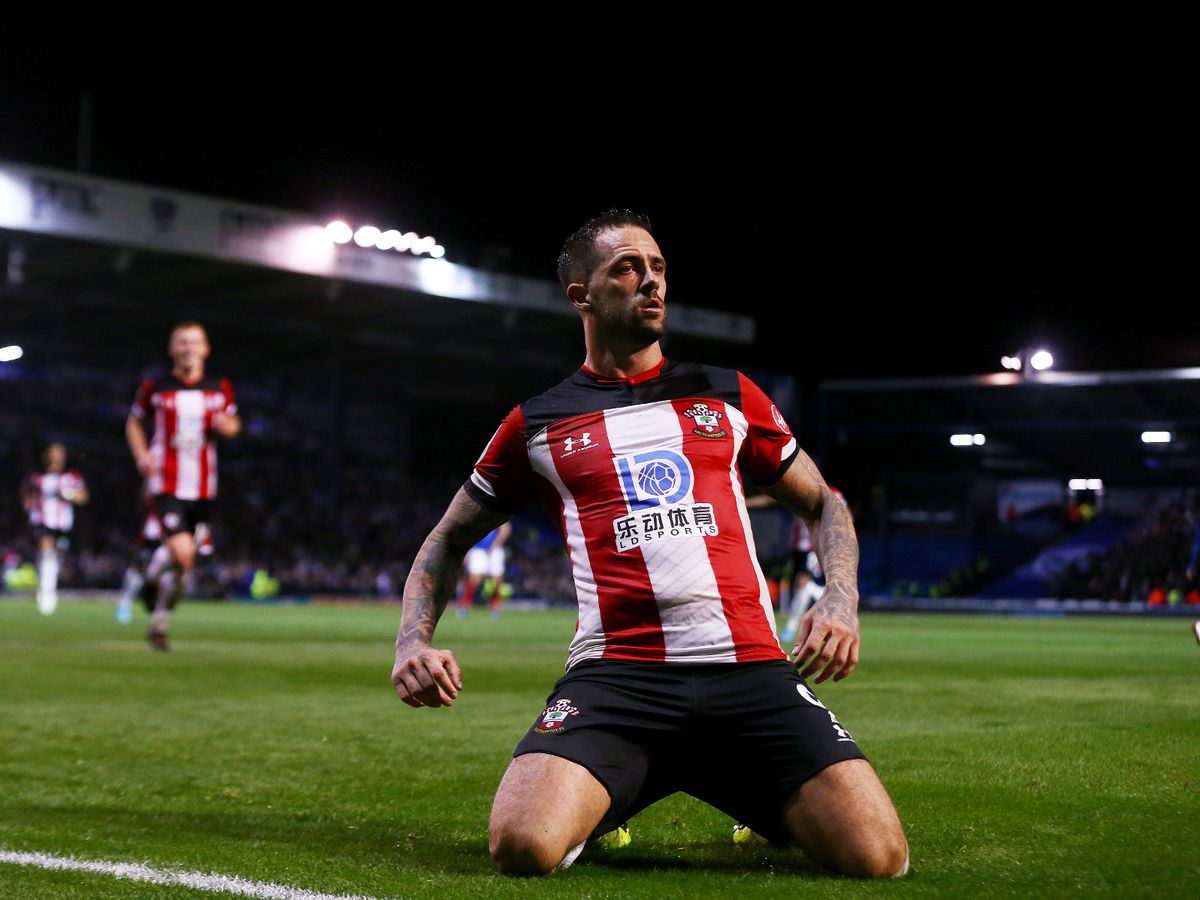
James Ward-Prowse: He Knows What He’s Here For

He has a golfing shot celebration, but more importantly, a technique and eagle-eye for a set-piece reminiscent of Beckham. Surely, Southgate has to take him to the Euros ⸺James Ward-Prowse. 

As a youngster James Ward-Prowse grew up as an avid Pompey fan, but today captains their bitter rivals Southampton. He has represented and captained England at youth level. At 26 years of age, he has amassed considerable experience with 261 Premier League appearances. 

Ward-Prowse’s dead ball expertise could be a game changer for England. Whilst Ward-Prowse tucked away his first senior goal for England against San Marino, we saw a glimpse of his capabilities from set-piece situations.  

In the 71st minute Ward-Prowse lined up a free-kick from the best part of 30 yards and were it not for a good save from San Marino’s Elia Benedettini, who tipped the effort on to the woodwork, Ward-Prowse would have doubled his England tally in the same match. 

Ward-Prowse’s Premier League stats speak for themselves this season.  
A goal tally of 7 includes 2 penalties and 4 free kicks. He also has 5 assists to his tally, 4 of which are from a corner and the other from a free kick. In total, 11 out of his 12 goal contributions this season have been from a dead ball situation. This is a decent record playing for a team currently in 13th place in the Premier League. It is the set-piece situations where he makes a difference.  

England have a range of players who draw fouls from their opponents on a regular basis: Sterling, Kane, Sancho, Foden, Rashford and Grealish just to name a few. Ward-Prowse could be the man to help England profit from this. 

As we saw in the 2018 World Cup, and against Poland, Stones and Maguire are very capable in the air and provide a very good target from corners. Stones providing Maguire with a headed assist to win the game for England against Poland is the most recent example of their importance and England’s reliance on set-play situations.

This goal was no mere fluke, Stones had been on the end of numerous England crosses in the international break and had opportunities to score. Stones has 4 goals in 18 appearances in the Premier League for Man City this season, an impressive goal tally for a centre-half. 2 of these goals were from set-pieces, with other 2 being tidy finishes in the penalty area. 

One of the most infuriating events in a football match is when your team wins a corner, representing a great opportunity to challenge the oppositions defense, only for it to be cleared by the first man. It always begs the question, do some players really not practice corners during the week?  

Well one man who definitely does is James Ward-Prowse. With the likes of Stones and Maguire amongst others, England are a major threat from corners. An aspect of the game which sometimes appears overlooked by many teams, but not England. In the 2018 World Cup England set a new record by scoring 9 of their 12 goals from set-pieces. Ward-Prowse’s accuracy from set-pieces could be an important ingredient to the way England are most likely to score.  

Ward-Prowse is not just a fine set-piece taker, but also a gifted footballer. A box-to-box runner, and a decent passer of the ball.  

He has nearly 200 more forward passes in the Premier League compared to Mount, and has more successful tackles and interceptions than the Chelsea man. I use these stats to boast Ward-Prowse’s ability, not denigrate Mount. (For the record, Mount would probably start if I was picking England’s first eleven). 

The recent qualifiers saw Rice paired with Kalvin Phillips in defensive midfield positions. This stilted England’s forward play. Rice has shown for West Ham he can occupy a defensive role on his own, allowing Tomáš Souček to push on forward. Phillips adds little defensively and his contribution of a series of 5-10 yard passes showed scant creativity. Note, this also means that Jordan Henderson is surplus to requirements if Rice plays. Two holding midfielders are not required in my opinion. A defensive midfielder can be replaced with a more dynamic forward-thinking player such as Lingard, Maddison, Bellingham, Grealish, or Foden, should Southgate choose to play them centrally. But out of all the players mentioned in this position, Ward-Prowse boasts the best set-piece ability. 

Granted there are other players in other positions who boast good set-piece ability. Most notably, in the past few years is Trent Alexander-Arnold. But, his form this season does not warrant a start in the England side and so he may not even be on the pitch. 

Ward-Prowse would not look out of place alongside Mount and Rice in my England midfield. He brings something different to the team. His set-piece expertise could be just as beneficial to the squad as Rice is at cleaning up a mess in the midfield, or as Mount is at creating chances from open play and linking up with the attack. 

Gareth Southgate should be including James Ward-Prowse in his 23-man squad this summer. Whether he starts is up for debate, and should he not, England have plenty of other talented players in his position. But given England’s limited ability to create chances from open play and reliance on set-pieces, as illustrated in the last World Cup, Ward-Prowse seems well-suited to England’s style of play.

No one in the England side has a delivery from a set-piece like Ward-Prowse. He knows what he’s here for: his set-piece talent is game-changing.  
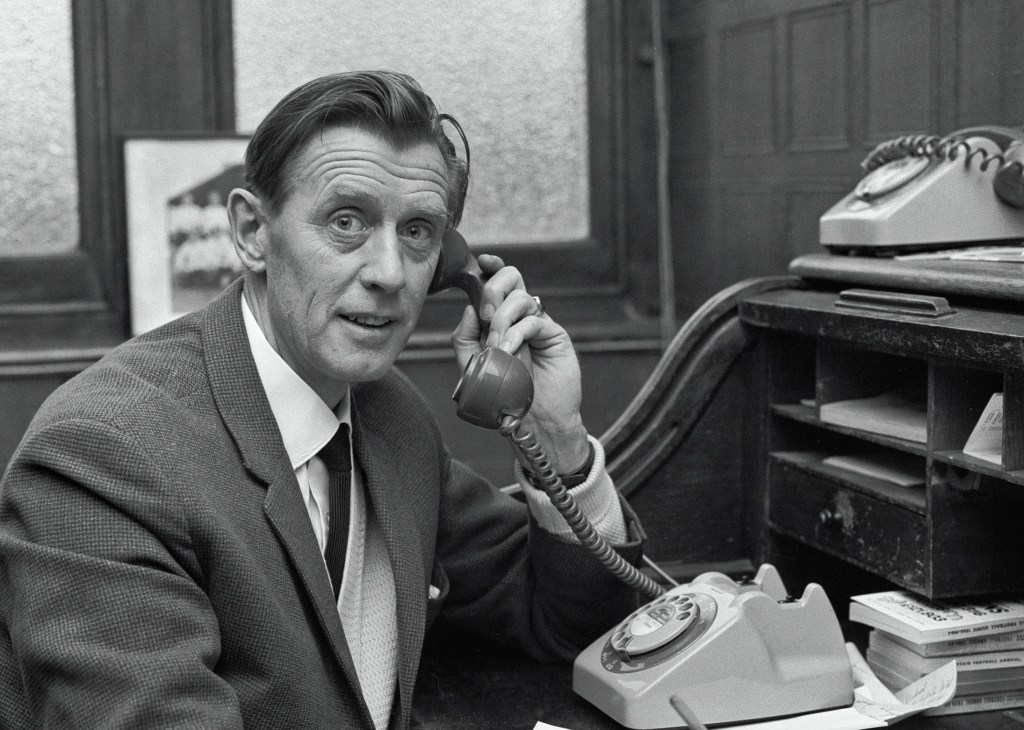
The Forgotten History of English Football Managers

Vic Buckingham

In recent years there has been a noticeable change in the way people view English football. It has become increasingly statistical. There are a variety of reasons: TV embellishing coverage, coaches and scouts evaluating players, betting firms creating a plethora of betting options. The statistics have very limited history, so we forget about football before them. Worse, people use statistics to reduce football to a pseudoscience. But in doing that, we miss the art of football, something beautiful to watch. We miss the role football plays in society and culture.

My aim here is to shed light on managers whose success is not written in numbers. These managers affected the tactics, social and cultural aspects of football. They rarely get spoken about. 

Herbert Chapman

A name known to the minority. Chapman’s involvement in football in the early 20th century was pivotal. He was a visionary, foreseeing European club competition and introducing aspects of the game that have endured and we take for granted.

Chapman was friends with Hugo Meisl and Jimmy Hogan and took a fondness to continental football. It is said that in 1909 he suggested the creation of a European football tournament, twenty years before a European competition was created.

His friendships with Meisl and Hogan are perhaps why he was one of the first managers who wanted to sign foreign players. Chapman also signed Walter Tull for Northampton Town, one of the first black professional footballers. Tull made 105 league appearances and scored 9 goals for Northampton. Tull was without doubt a remarkable person himself. He enlisted in the British Army in December 1914 and became second lieutenant in 1917.

Chapman changed the role of manager. He was the first manager to pick the players he wanted to sign, pick his own line-ups, and invented various formations due to an adaptation of the offside rule in 1925. In doing this he created the job specification of the 20th century manager.

Today, no one considers where the use of white footballs, numbered shirts, or the introduction of flood lights into the game came from. Chapman played a role in all these developments.

His time as manager also produced silverware. In the 1908-1909 season he won the Southern League with Northampton Town. After a stint at Leeds City, Chapman then managed Huddersfield Town. Between 1921 and 1925, Chapman won the FA Cup and two First Division titles.

Successive titles at Huddersfield was a feat he matched at Arsenal. He also won another FA Cup with The Gunners. Arsenal went into the 1933-34 season looking for a third successive title. However, Chapman died of pneumonia on the 6th January 1934 and was unable to see the season out.

In 2003, Chapman was inducted into the English Football Hall of Fame and has since been commemorated by Arsenal as they revealed a statue of Chapman outside the Emirates in celebration of the club’s 125th year anniversary.

Chapman should be remembered not just for the silverware he won, but for his involvement in the sport itself. Whether it was deciding his own transfers or putting numbers on the back of the shirts, Chapman’s role in the beautiful game should be remembered.

Vic Buckingham

Perhaps it is not common knowledge that it was a Londoner who gave Johan Cruyff his debut for Ajax. A playing career with over 200 appearances for Tottenham — where he learnt the ‘push and run’ tactic — was followed by a managerial career which toured Europe. Vic Buckingham took the ‘push and run’ tactic to Europe when he managed Barcelona and Ajax.

In 1954, Buckingham’s West Brom side defeated Preston North End that included Tom Finney in a thrilling 3-2 encounter. Frank Griffin’s 87th minute winner was enough for Buckingham’s first major piece of silverware. Buckingham’s style of play avoided the ever present “lump it forward” tactic which blanketed English football at the time.

By 1959, he was manager of Ajax. The 1959-60 season saw him win the Eredivisie title. His stay at Ajax was cut short due to personal reasons, but it left a lasting effect with the ‘push and run’ tactic influencing the ‘pass and move’ of Total Football that became synonymous with the Ajax and Dutch national teams in the 1970s.

After a stint at Sheffield Wednesday, Buckingham returned to Ajax ready for the 1964-65 season. An unsuccessful return to Amsterdam perhaps clouds his granting of a league debut to Johan Cruyff. His departure from Ajax teed up a new era for Dutch football as Rinus Michels succeeded him.

In an interview with The Guardian in 2014, Cruyff complimented Buckingham for his time at Ajax: “Football in Holland then was good but it was not really professional. [Buckingham and Spurgeon] gave us some professionalism because they were much further down the road.”

Buckingham’s only other silverware was with Spanish giants Barcelona. There he won a Copa Del Rey. 

Buckingham can be credited for handing the debut to Johan Cruyff, but he must be remembered for his style of football. Buckingham’s vision in a passing style of football teed up a Dutch footballing revolution under Rinus Michels.

Stan Cullis

Wolves fans will know the name. Their most successful manager.

Cullis’ love for Wolves stemmed from his father. During his school years, Cullis was selected to play for Ellesmore Port Boys who often attracted scouts to their games. Cullis, in his autobiography, said that his father refused to let scouts talk to him. His father wanted him to play for Wolves, and so he did. 

A playing career which consisted of captaining both Wolves and England was hindered due to the outbreak of the Second World War.

Like many in his era, he suffered head injuries. During his career Cullis suffered two awful concussions resulting in doctors warning him that even heading a football could be fatal. His aerial presence was a trait which was recognised by many. In Stanley Matthews’ autobiography, he said that Cullis was the best header of the ball in the Football League.

His playing career also provided controversy. Cullis, like his father, had strong morals. In 1938 England played Germany and Cullis was the only England player who refused to perform a Nazi salute prior to kick off. Cullis was dropped from the team for the match. The FA told players to do the Nazi salute, Cullis’ refusal shows his strength of character and moral integrity.

When Stan Cullis became Wolves manager in 1948, he was just 31 years old. In 1949, with Cullis now 32 years of age, he won the FA Cup. A triumph later followed by three First Division titles as well another FA Cup in 1960.

Cullis is remembered for his strict discipline as well as his dogged style of direct football. A man who would have done anything for Wolves, he now has his own stand at Molineux as well as a statue outside the ground. 

Jimmy Hogan

Jimmy Hogan is not well-known on domestic soil. His managerial career was spent largely elsewhere on the continent.

Hogan’s influence in Central and Eastern Europe is unprecedented. Hogan’s influence was mainly in Hungary, but both Austria and Germany were also beneficiaries of his ‘Danubian style’ of football. With reference to The Danube — a river flowing through Eastern and Central Europe — the ‘Danubian’ style of play relied on patience and plenty of movement.

Hogan’s influence helped Hugo Meisl produce the best ‘Danubian’ side there was. Often set up in a 2-3-5 formation, Meisl’s Austrian national side became known as ‘The Wunderteam’. This side reached the semi-finals of the World Cup in 1934 losing to Italy, the eventual winners.  

Hogan then managed the Austrian football side at the 1936 Olympics. A loss in the final to Italy saw Hogan pick up an Olympic silver medal. 

In late 1936, Hogan took over Aston Villa. A side which had just endured its first ever relegation. The 1937-38 season saw Hogan and his Villa side promoted back to the First Division.

A footballing revolution across Europe is often credited to Jimmy Hogan. A revolution which perhaps led to England’s first ever loss on home soil. In 1953, Hungary battered England 6-3 at Wembley. After the match, Hungarian manager Gustav Sebes gave Hogan the praise: “We played football as Jimmy Hogan taught us”, “when our football history is told, his name should be written in gold letters.”

Hogan’s view of football was advanced for his time. Too advanced that he never prospered on home soil. However, Jimmy Hogan must be remembered for transforming parts of Europe into footballing nations. His work in Austria and Hungary, and his time with Hugo Meisl helped develop a fluid style of football which England refused to accept.

Bill Nicholson

Bill Nicholson is the epitome of a one-club man. A playing career in which he played only for Tottenham Hotspur. A playing career which included one England cap, which led to one goal, on his very first touch. Nicholson’s time as a player, like many, was hampered by war but still produced some silverware winning the First and Second Division. 

Whilst team-mate Vic Buckingham introduced Dutch giants Ajax to the ‘push and run’ tactic, Nicholson embedded it into his Tottenham side, which in his sixteen years as boss, were tremendously successful.

In 1960-61, Nicholson’s side produced the first “double” of the twentieth century, winning the First Division and the FA Cup. Their league campaign saw them score 115 times in just 42 games. 

There was no looking back. After Nicholson’s first season, Spurs went on to win two more FA Cups, two League Cups, an UEFA Cup and a European Cup Winners’ Cup.

Nicholson’s time at Tottenham should not be underestimated. A managerial career which lasted 16 years meant that his Tottenham side went through a number of transformations. During his time Nicholson signed Jimmy Greaves for £99,999 purposely making sure he did not get the label of being the first one-hundred thousand pound player. 

Tottenham’s glory days under Nicholson ended with hostility between himself and the club. An argument over his successor led to Nicholson being refused a testimonial. However, Bill Nicholson’s time at Tottenham provides a fine example of loyalty which blossomed with success. 

Mr. Tottenham Hotspur should never be forgotten.

A History Which Should Never Be Forgotten

With an increased detailing of statistics in the modern game, some of England’s greatest managers often get forgotten. Their successes are overshadowed by data presenting The Premier League as the definitive era of football. The Premier League has provided us with some memorable moments, but it is a recent history. The history of football is much richer than Premier leagues statistics, which is too often forgotten.

England’s Unlikely Lads — Or Are They?

With the FA cup 4th round starting last night, attention has been diverted away from the Premier League. No offence meant, though fans of respective clubs will probably take it — the prospect of Northampton against Derby was hardly going to open the eyes of many, and with very few appealing fixtures this weekend, my thoughts are on England’s squad for the upcoming 2020 European Championships.

23 players have the chance to wear the famous white shirt that is embroidered with 3 lions and 10 red roses at the 2020 European Championships. Gareth Southgate will soon have the onerous task of selecting those players to represent their country. 

The dynamics of selecting the squad has changed dramatically due to the young talent the country now produces. Notable examples include Trent Alexander-Arnold who appeared just once in England’s 2018 World Cup campaign and since then has won the UEFA Champions League, the UEFA Supercup, and the FIFA Club World Cup. Tammy Abraham on the other hand, was pivotal to Aston Villa’s Championship play-off success last season, and now wears the number 9 shirt for Frank Lampard’s Chelsea, a shirt number worn by the likes of Fernando Torres and Hernan Crespo- not bad for his first full season as a Blue.

However, Gareth Southgate’s headache may have worsened due to impressive seasons from some of England’s ‘unlikely lads’. This label does not suggest the likelihood of an international call up, because until recently their names and the words “England’s Euro 2020 squad”, would not have featured in the same sentence.

I have hand-picked some players from positions across the pitch who, depending on circumstances, have an outside chance of making Gareth Southgate’s 2020 European Championships squad.

“England’s Number 1, England’s, England’s Number 1”

Sheffield United fans have made it clear who they think England’s shot-stopper should be. Henderson’s fine display against Manchester City saw him save Gabriel Jesus’ penalty prompting chants of “England’s number one” amongst the Blades fans.

Manchester United academy prospect Dean Henderson is currently on loan to Chris Wilder’s Sheffield United. Henderson was part of the England Under 21 side in the Under 21 European Championships last year.

Henderson is yet to feature for England team but did receive a call up in October after Tom Heaton pulled out due to injury. The goalkeeping ace was Chris Wilder’s brick wall last season keeping 20 clean sheets – a league high. Sheffield United’s return to the Premier League has been nothing short of superb. Wilder’s boys are currently eighth in the table and Henderson has made a significant contribution to this with 8 clean sheets this season.

Henderson’s chances of featuring in Southgate’s squad are perhaps increased due to the unfortunate injury of Tom Heaton who suffered knee ligament damage and will miss the remainder of the season. England are not short on goalkeepers, yet Henderson appears to be the most outstanding. Jordan Pickford’s role in Everton’s lacklustre season would hardly have made Gareth Southgate jump out of his seat, and Jack Butland’s dreadful start to the season saw Southgate exclude him from the national side for the games against Switzerland and Kosovo. 

Should Henderson continue his fine performances in Sheffield United’s impressive return to the big time, he is arguably putting a strong case down to be England’s number 1.

All roads lead to Rome and Chris Smalling

From Manchester to Rome, Chris Smalling’s loan switch to AS Roma has allowed the London born centre half to reinvigorate his career. 

After Harry Maguire’s record-breaking move to Manchester United in the summer, United had a surplus of central defenders, so Solskjær let him go on loan to Roma. Smalling’s start for the Giallorossi has shown promising signs; a Europa League tie against Istanbul Basaksehir ended with Smalling wearing the captain’s armband; and has been dribbled around an average of 0.1 times a game (whoscored.com). 

Roma finished the last campaign 6th, and this season are currently in 4th spot. In England’s World Cup campaign, Gareth Southgate often opted for a 3-5-2 formation allowing space for 3 central defenders. However, Southgate’s system has since appeared to change. England’s qualifying campaign has seen them utilise the 4-3-3 formation limiting the formation to two centre halves, perhaps making Smalling’s chances slim.

This Premier League season has seen some of England’s centre halves struggle for form, with few exceptions. Joe Gomez’s career has blossomed in Jurgen Klopp’s formidable Liverpool side and is making a statement for his place in England’s side. However, with the likes of Harry Maguire playing in Ole Gunner Solskjær’s mediocre Manchester United side; John Stones and Michael Keane struggling to find form; and Tyrone Mings part of newly promoted Aston Villa side, Chris Smalling might be an unexpected addition to Southgate’s squad. 

Whilst Rome was not built in a day, Southgate has just a few months to cement a solid centre half partnership that can compete, and Smalling may have caught Southgate’s eye.

Jack’s Playing a Blinder

With gelled back hair, effectively useless shin pads, and a unique swagger on the pitch, Jack Grealish’s influence in Dean Smith’s Aston Villa side is exemplary.

His return from injury in Aston Villa’s play-off success last season was inspiring. Returning from injury on the 2nd of March, Dean Smith handed Grealish the captaincy as they defeated Derby County 4-0 with Grealish scoring a sublime goal. This emphatic victory inspired a 10 game winning streak in which Villa coasted up the table ultimately securing their place in the play-off positions.

Now the Christmas period has concluded, each game is growing in importance for Aston Villa. Grealish has played a vital role so far in Villa’s season, he has registered 7 goals and 5 assists so far in the Premier League.

England’s midfield is arguably the most competitive position in the side with the likes of Jordan Henderson, Alex Oxlade- Chamberlain, Dele Alli and a whole host more. With international friendlies against Italy and Denmark around the corner, it would be surprising if Southgate did not select Grealish to assess his ability at an international level in at least one of them. 

Southgate’s decision on England’s midfield might provide controversy amongst football fans, but Grealish’s pivotal role in Aston Villa’s side provides a persuasive argument in selecting him for England’s 2020 squad.

The Saints have something they want you to know

This season has brought light to a new English striking prodigy. At 27 years of age, Danny Ings has been a sensation for Ralph Hassenhüttl’s Southampton side registering 14 Premier League goals for The Saints.

To put things into perspective, Danny Ings has scored the same amount of Premier League goals as Pierre-Emerick Aubameyang and Marcus Rashford and has scored more than the likes of Sadio Mané and Mohamed Salah. 

With Kane and Rashford out for the upcoming international friendlies, Southgate might just give Ings his chance. Ings has just 1 international appearance, yet might prove crucial to Southgate’s plans. Despite injuries to the likes of Kane and Rashford, Ings faces some competition with Dominic Calvert-Lewin finding some form under new coach Carlo Ancelotti. The striker has 10 goals so far this campaign and will be looking to impress Southgate himself. 

Ings has been in red-hot form for the Saints, and whilst he might be unlikely to start for the Three Lions, his predator instincts and awareness around the goal would be credible assets coming off the bench for England. 

Down to you Gareth

The dynamics of football change so rapidly. Dean Henderson and Jack Grealish have transitioned from Championship football to the Premier League; Chris Smalling has been part of the post Alex Ferguson era which has seen Manchester United struggle to compete with the elite; Danny Ings finished last season’s Premier League campaign with 7 goals, a feat which he accomplished on the 9th November against Everton this season. The transformation of their careers within the last 6-8 months could potentially lead to a chance to play for England in the 2020 European Championships.

Design a site like this with WordPress.com
Get started